
Academics at Legacy
Accelerated, Back to Basics Education

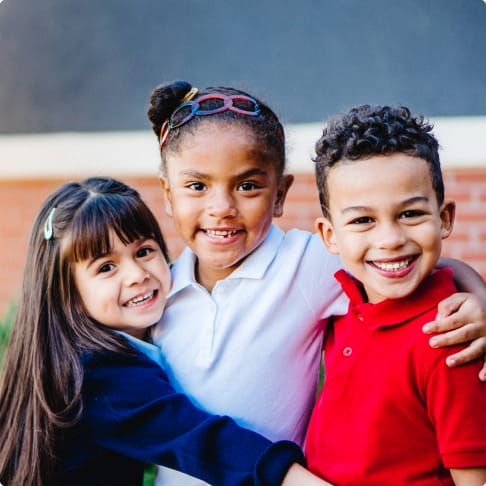
From Pre-K to Jr High School
At Legacy Traditional Schools, we believe every student deserves access to a high-achieving, well-rounded education. Whether your child begins in Pre-K or joins us later in their academic journey, Legacy serves a range of grade levels, including Pre-K, K–6, and K–8 campuses, for a consistent and structured approach to learning. Legacy’s back-to-basics model emphasizes strong academic and behavioral expectations, direct instruction, and a proven curriculum that includes core subjects, physical education, and the arts. While grade-level offerings vary by campus, every Legacy campus provides a safe, supportive environment and a school culture where students are empowered to thrive.
Find your school to learn more about the grade levels offered at your campus.
Pre-K
The pre-kindergarten program is aligned with the Arizona Department of Education’s Early Learning Standards: Prekindergarten children will participate in primary language arts (Spalding), Math, science, music, art, and physical education through hands-on discovery and other age-appropriate activities.
Kindergarten
Legacy Traditional Schools offers a variety of kindergarten programs by campus, from Tuition-FREE full-day and half-day kindergarten programs to our Kindergarten Education Enrichment Program (KEEP), which extends the half-day kindergarten school day for a fee.
Junior High Curriculum
- English Language Arts
- Mathematics
- Science
- Social Studies
- Art
- English Language Learners
- Computers
- Cornell Notes
- Art I
- Art II
- Band
- Orchestra
- Environmental Science
- Physical Education
- Spanish I(A) & I(B)
- Academic Achievement Group
- Academic Intervention Group
- Choir
- Coding I & II
- Computers I & II
- Debate
- Drawing
- Engineering Design and Development
- Guitar
- Legacy Wellness
- Media Arts
- Music Exploration
- Musical Theatre I & II
- Piano
- Stage Craft
- Typing for High School
- VEX Robotics
- Yearbook
- Photography
- AdvancED Certified
English Language Arts
Our language arts program is based on the Spalding Method using The Writing Road to Reading (2012). As a total language arts program, Spalding integrates direct instruction in listening, speaking, spelling, writing, and reading. The Spalding mission is to develop skilled readers, critical listeners, accomplished speakers, spellers, writers, and lifelong learners. The following are crucial components of the Language Arts program:
Composition
Students learn to express their understanding by composing structured sentences and paragraphs. They explore different writing styles, including narrative, informative, persuasive, and argumentative, aligned to grade-level expectations. Using rubrics and checklists, students are encouraged to be creative while maintaining high standards for grammar, spelling, punctuation, and neatness.
Oral
Students practice listening and speaking skills through memorization and recitation of quality poetry, prose, and historical selections such as excerpts from the U.S. Constitution. These exercises build fluency, expression, and public speaking confidence. Typically, students in grades K–5 memorize and present one piece each grading period, evaluated against clear performance criteria.
Reading/Literature
Students develop strong comprehension and vocabulary skills by engaging with high-quality contemporary literature and classic works. Instruction is based on the Spalding Method and supplemented with McGraw Hill Wonders anthologies and approved literature studies. Students participate in Silent Sustained Reading (SSR) daily and are encouraged to read at home. Throughout the year, students complete three to four detailed book reports to strengthen critical thinking skills. Books must be teacher-approved, and previous titles may not be repeated.
Spelling
Spelling instruction follows the Spalding Method, a phonics-based approach that emphasizes daily written and oral phonogram practice. Students build strong foundations in phonics, manuscript, and cursive handwriting.
Vocabulary
Vocabulary development is integrated across reading, writing, and spelling. Students learn precise definitions, practice using academic vocabulary in writing, and build comprehension through dictionary and reference skills.
Mathematics
Legacy schools in Arizona and Nevada teach enVision Math, which includes robust resources such as lessons, activities, assessments, textbooks/workbooks, and technology. enVision Math focuses on deep conceptual math and understanding through lessons that progress from introduction to more complete usage of a concept.
This depth of knowledge is designed to better prepare students for real-world experiences. Strictly aligned with state standards, enVision also offers greater integration with Schoology so students can better view and work on materials from home as needed.
Science
Legacy’s science curriculum enables our students to construct an understanding of scientific concepts through investigation and analysis, the use of laboratory equipment, student readings, and interactive technology. Students exercise logical thinking and decision-making skills appropriate to their grade level.
Social Studies
The social studies program at Legacy includes the study of world history, U.S. history, Arizona history, and geography. Students also learn about responsible citizenship and America’s place in global history and economic
Art
In Art class, students utilize a variety of media and techniques to create art projects that emulate historically significant artists and art styles. Students will learn essential art vocabulary as well as the basics of art history, the elements of art, and the principles of design.
Art Masterpiece allows students the opportunity to experience a more in-depth exploration of materials, examination of art history, mastery of the elements and principles of design, and acquisition of skills and techniques needed for effective creative expression. Students will not only produce a wider breadth of artwork in a variety of media; they will also investigate diverse practices to gain a critical understanding of the qualities that distinguish successful artwork, both within a historical context and in relation to their own creative development. (program offerings and/or availability may vary by campus and grade level).
English Language Learners
All ELL students receive daily instruction that is aligned to the Arizona State Structured English Immersion (SEI) models. Each daily lesson includes four hours of daily instruction in the areas of grammar, reading, writing, oral conversation, and content vocabulary.
Computers
Computer class introduces students to the basics of computer use, keyboarding, cyber-safety, and the use of various software programs for academic purposes.
Cornell Notes
We know that true learning requires the student to be an active participant. We teach our students the Cornell Note Method to enhance their experience at Legacy and beyond. Students learn a proven way of taking notes that is instrumental in helping retain and recall important information.
Art I
Students will utilize a variety of media and techniques to create art projects that emulate historically significant artists and art styles. Students also explore art appreciation, art history, the principles of design, and the seven elements of art. Students also learn how to utilize the elements and principles of design in order to create captivating and engaging works of art.
Art II
Art II is designed for students who would like to expand their knowledge of the concepts learned in Art I. Students work to explore aesthetics, art history, art styles, art appreciation, art materials, and techniques. Students also learn how to utilize the elements and principles of design in order to create captivating and engaging works of art. Prerequisite: Art I
Band
Woodwind, brass and percussion students develop and refine the skills learned in elementary band in an ensemble setting. Emphasis is placed on tone production, rhythm, melody, harmony, articulation, balance, blend, and dynamics. Students prepare for at least two performances each year, featuring music of various genres and cultures. Students participating in band must provide their own instrument and method book.
Orchestra
String students develop and refine the skills learned in elementary orchestra in an ensemble setting. Emphasis is placed on tone production, rhythm, melody, harmony, articulation, balance, blend, and dynamics. Students prepare for at least two performances each year, featuring music of various genres and cultures. Students participating in orchestra must provide their own instrument and method book.
Environmental Science
This course is designed to provide students with a foundation of the basic principles in Environmental Science. Students will gain awareness in a variety of environmental topics including populations, natural resources, pollution, and waste. The course will highlight matters surrounding water, air, land, and the human impact on the environment.
Students will apply critical thought to the latest environmental issues, work collaboratively, connect to their community, and develop a variety of models to investigate phenomena and make predictions. The students will actively learn by completing hands-on lab activities and thinking critically about their observations.
Physical Education
Physical Education students will increase overall physical fitness and sport-specific skills. Students will develop the five essential core fitness components: muscular strength, muscular endurance, flexibility, cardiovascular strength, and body composition. Additionally, students will improve sportsmanship and learn sport-specific skills, rules, and the many health benefits of playing sports. Our curricular resources include Intro to Sport Education and Fitness for Middle School
Spanish I(A) & I(B)
Students in Spanish I(A) are introduced to the study of the Spanish language and its culture. Students perform basic functions of the language and become acquainted with some elements of its culture. Students focus on the development of listening, speaking, reading, and writing skills with an emphasis on using Spanish in instruction and classroom activities. This course focuses on students’ lives and experiences and includes exposure to everyday customs and lifestyles in Spanish-speaking countries. Proper Spanish grammar is incorporated throughout the course.
Students in Spanish I(B) will continue their learning process from Spanish I(A). This course will continue to build basic grammatical structures and key vocabulary terms. Students will perform basic functions of the language and become acquainted with more elements of its culture. Students will be engaged in developing their listening, speaking, reading, and writing skills with an emphasis on using their Spanish acquisition during instruction and classroom activities. This course maintains its focus on student lives and experiences and provides exposure to everyday customs and lifestyles in Spanish-speaking countries. Proper Spanish grammar remains an integral component throughout the course.
Academic Achievement Group
Academic Achievement Group is offered to students who would like to complete their required coursework/homework during the school day. During this elective course, students may receive individualized support from a certified teacher which may include grade checks, access to google classroom for information, and small group tutoring. All junior high students are welcome to join. Suggested concentrations may include the following: staying organized, effective use of academic agendas, managing long term projects, Science and Engineering Fair Project check-ins, how to prepare for tests, how to manage time at home, using Google classroom and other resources/materials.
Academic Intervention Group
“Academic Intervention Group is designed to meet the individual needs of students who are experiencing significant difficulties with English Language Arts and mathematical skills. Students are taught specific rules and strategies to improve their organizational, reading, writing, and mathematical skills, and are provided with many opportunities for the guided and independent practice of these skills. Intervention will be specific to the student’s individual needs and can be found in NWEA MAP Skills resources or teacher-created.
Choir
Vocalists develop and refine the skills learned in elementary general music in a choral ensemble setting. Emphasis is placed on vocal technique, rhythm, melody, harmony, articulation, balance, blend, and dynamics. Students prepare for at least two performances each year, featuring music of various genres and cultures.
Coding I & II
An advanced introduction to programming for middle school. Introduce programming fundamentals to your class as they build two arcade-inspired games from start to finish. Students who successfully complete this lesson plan will demonstrate an excellent understanding of a variety of programming concepts and computational thinking skills and will be able to design and implement projects of moderate to advanced complexity. Students will also be introduced to Python as they complete engaging lessons, solve challenging puzzles, and build their own games in Python. This course will help them transition to Python and adapt to the additional challenges of text-based syntax. Students who successfully complete this lesson plan will demonstrate a strong mastery of Python syntax, as well as the ability to creatively program games and other projects and debug their own code. Students will also be able to come up with an idea for a game and take it through the entire design and implementation process, creating custom versions of many of their favorite games in Python.
In Coding II, students will be introduced to JavaScript as they complete engaging lessons, solve challenging puzzles, and build their own games in JavaScript. This course will help them transition to JavaScript and adapt to the additional challenges of text-based syntax. Students who successfully complete this lesson plan will demonstrate a strong mastery of JavaScript syntax, as well as the ability to creatively program games and other projects and debug their own code. Students will also be able to come up with an idea for a game and take it through the entire design and implementation process, creating custom versions of many of their favorite games in JavaScript. Students will also learn how to use coding in web development and to operate microbits.
Computers I & II
Students develop and refine the skills learned in elementary Computer class. Computers will include keyboarding, cyber-safety, research skills, basic coding, and the exploration of various computer and software applications for academic purposes.
In Computers II, students deepen their understanding of graphic design and focus on project-based learning. Students explore various computer and software applications for academic purposes. Computers I is a prerequisite.
Debate
Debate teaches students how to be active and critical listeners. Listening, comprehension, and writing skills are increasingly important in ELA content standards. These skills are critical to success across the curriculum to develop sophisticated listening skills and engage other aspects of curricular instruction. Debating is “active learning,” understood as a process of involving students in an activity while they reflect critically about what it is they are doing.
Drawing
Students will develop and refine their skills with multiple drawing techniques and will be introduced to a variety of drawing tools and types of paper. Students will learn how the elements of art are used in drawing and how the principles of art are applied to create harmonious artwork and drawing compositions. Students will develop a portfolio of work to document their improvement and will critique their own works alongside evaluations of their peers and other artists.
Engineering Design and Development
Engineering Design and Development courses provide students with the opportunity to apply engineering research principles as they design and construct a solution to an engineering problem. Students will develop and test solutions using computer simulations or models but eventually create a working prototype as part of the design solution. Students will understand the basic knowledge of engineering principles and systems such as the engineering process, system analysis, and control, focusing on the application of mathematical laws and principals.
Guitar
Guitar students develop and refine musical and technical skills, which will enable them to perform basic guitar music. Previous music or guitar experience is not required. Emphasis will be placed on music reading (including chord symbols), tone quality, rhythm, melody, harmony, articulation, balance, blend, and dynamics. Students prepare for at least two performances each year, featuring music of various genres and cultures. Students participating in guitar class must provide their own instruments.
Legacy Wellness
Legacy Wellness students will develop the five essential core fitness components — muscular strength, muscular endurance, flexibility, cardiovascular strength, and body composition — by participating in a variety of non-competitive group fitness activities. Students will set nutrition and fitness goals for themselves and take steps to achieve life-long wellness.
Media Arts
Media Arts students explore the foundations of media and technology in our daily lives through audio and video formats. Students navigate the many roles of a media production by learning to produce, record, edit and present media using audio/video recording devices and media editing software. Projects range from creating their own podcast with sound effects and producing a short documentary film. Students have the opportunity to set personal goals and monitor their own progress through a student-designed, project-based, blended media class.
Music Exploration
Music Exploration students explore various aspects of music as performers, composers, and historians. Previous music experience is not required. Students learn basic music reading, notation, and composition utilizing percussion instruments, voice, and multimedia. The curriculum includes a survey of music careers and musical genres including jazz, blues, rock, folk, classical, and world music.
Musical Theatre I & II
Young actors explore different aspects of musical theatre production including vocal technique, choreography, character development, verbal expression, and stage movement. Class activities include interviewing, storytelling, and formal speaking and acting with scripts. Students prepare small group, large group, and individual performances using simple costumes, props, and scenery.
In Musical Theatre II, students participate in memorization techniques, audition techniques, improvisation skills, and scriptwriting. Students prepare small group, large group, and individual performances using costumes, props, and scenery. Musical Theatre I is a prerequisite.
Piano
Piano students develop and refine musical and technical skills. No previous music or piano experience is needed. Students learn musical concepts including keyboard skills, music literacy, basic transposition, harmonization, sight-reading, improvisation, dynamics, articulation, and basic keyboard repertoire. Students also learn and develop characteristic performance styles from several musical genres.
Stage Craft
Stage Craft students explore various aspects of stage production including set, lighting, costume, prop, and audio design. Students develop leadership, teamwork, and critical thinking skills by participating in a live stage production.
Typing for High School
In this course, the student will learn the touch method of keyboarding using a personal computer keyboard as well as document processing using Google classroom and Microsoft products. Through this course, students become familiar with different keyboard and document functions while improving typing speed and accuracy. Students will learn keyboard using an interactive typing program designed to help students level up and earn badges and star while improving their proper hand posture guides, speed, and accuracy.
VEX Robotics
Students will use STEM standards to understand math, science, and engineering design processes. Students will be engineering their own robot while studying coding using problem-solving concepts to take on challenges complete specific tasks and missions. A rigorous rubric guides each challenge.
Yearbook
Yearbook students conceptualize, design, edit, and publish the yearbook for the current academic year. Students learn the basics of planning and design, photography and layout, communication, professionalism, coordination and scheduling, advertising, sales, editing, and interviewing. Yearbook students may attend events outside of normal class time in order to fulfill responsibilities or to meet deadlines.
Photography
Students will focus on understanding the basic operations and functions of a digital single lens reflex camera and the manipulation of its setting to achieve a specific result. Students will study photographic elements of art and principles of design, composition, and lighting. They will explore the history of photography, learning its scientific and technological developments, important innovators in the field, and relevance within diverse cultural contexts. Along the way, they will learn image techniques. Students will write and speak about aesthetic, technical and expressive qualities in a photograph while learning to critique their own and others’ work. A rigorous rubric guides each challenge.
AdvancED Certified
Legacy Traditional Schools are internationally accredited by AdvancED, a non-profit, non-partisan organization that conducts rigorous, on-site external reviews of PreK-12 schools and school systems. AdvancED is recognized as a leader in achieving educational quality by driving educational improvement through research and innovation, policy and advocacy, technology, and accreditation.
Exceptional Student Services
Legacy Traditional School’s Exceptional Student Services department oversees programming for students with disabilities or special needs. These programs are free, appropriate, public education services for students with disabilities (in accordance with state and federal statutes and regulations).
In addition, Legacy provides a challenging program for qualified gifted students in 7th and 8th grades. The Recognizing Individual Student Excellence (RISE) Program allows students to take part in problem-solving and critical thinking activities through various units of study across all disciplines.
Electives
All junior high students have the opportunity to select from a variety of electives each semester. We have designed our electives to help develop all of the important characteristics that lead to developing successful, well-rounded children.
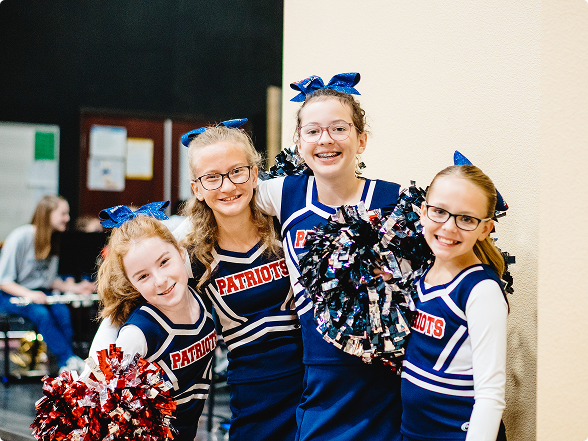
Find your school to learn more about the programs
offered at your campus.